
Your Local Mortgage Lender
Located in Sarasota, Florida
Personalized Mortgage Experience
Dennis Wells offers personalized service and loan options you'll love. We shop multiple lenders to find the best rate and product for you, getting you into your dream home faster.
With wholesale interest rates and cutting-edge technology, we make the mortgage process seamless. Trust the experts who focus solely on mortgages. Support your local community and experience elite client service.
Let us help you achieve your homeownership dreams!
The Home Loan Process
Mortgage Pre-Approval
Get pre-approved from one of our Loan Officers to see how much you can afford.
House Shopping
Work with a trusted Real Estate Agent to find a home you would like to move into.
Loan Application
Complete your home loan application to get the lending process started.
Don't take my word for it
Mortgage Programs
Experience the best mortgage experience located in Sarasota, Florida.
Home Loan Options
Our experienced mortgage advisors will walk you through the best mortgage loan program that will fit your specific scenario.
Conventional Home Loans.
FHA Home Loans.
USDA Home Loans.
VA Home Loans.
Frequently Asked Questions
How often can I refinance my mortgage?
There is no limit to the number of times you can refinance. However, you must qualify every time you apply and there will be costs associated with closing the loan each time.
Can I buy a home if I do not have money for a down payment?
Yes! There are a number of bond programs that offer low or no down payment financing options.
How do I know which mortgage is right for me?
The key to choosing the right mortgage is to understand the range of options and features available to you, as well as your budget, circumstances, and goals. Our licensed mortgage professionals are here to help you navigate that process. The more you know, the more comfortable and confident you will be choosing the best option for you and your family.
How long will the loan process take?
The Truth in Lending Act (TILA) does not permit a lender to close a loan until at least seven (7) business days have passed from the date your application was received. A typical home loan takes 30 days, as a number of third-party services such as appraisals, title work, and credit are required in conjunction with the mortgage process. Once you familiarize your Loan Officer with the details of your specific loan scenario, they will be able to provide you with a more specific timeline.
Will I qualify for a home loan?
The only way to find out is to speak with a qualified mortgage professional. Our Loan Officers have helped numerous clients who didn’t know if they could qualify to become home owners. We take the time to understand your financial situation and long-term financial goals, and then match you with the loan program that best fits your needs. Your approval for a loan may also largely depend on the price of the home you are financing. Getting pre-qualified prior to beginning your home search can give you an idea of what you may be able to afford.
Why do people refinance their mortgages?
Homeowners typically refinance to save money, either by obtaining a lower interest rate or by reducing the term of their loan. Refinancing is also a way to convert an adjustable loan to a fixed loan or to consolidate debts.
How much money will I have to pay upfront to buy a home?
This question does not have a simple, one-size-fits-all answer. The exact amount will depend on the price of the home you buy as well the type of mortgage financing you choose. Depending on your loan program, your down payment could be as much as 20% of the home’s price or as little as 3%, while some loans require no down payment at all.
Can I get a mortgage after bankruptcy?
You may still qualify for a home loan even if you have experienced a bankruptcy. The best way to find out if you qualify is to talk with a Loan Officer to discuss your options. Be sure to bring all paperwork regarding your bankruptcy so your Loan Officer can find the program that best fits your situation.
Should I lock my interest rate now, or wait until we are closer to our closing?
Interest rates fluctuate all day, every day. If an interest rate is good, it may be in your best interest to lock now. If you wait, you run the risk of an increase in rates later. If you are concerned that rates may go down after you lock, contact your Loan Officer to discuss your options. Some programs allow you to lock for an extended period and choose to lower your rate should a better one become available.
Most Recent Blog Updates
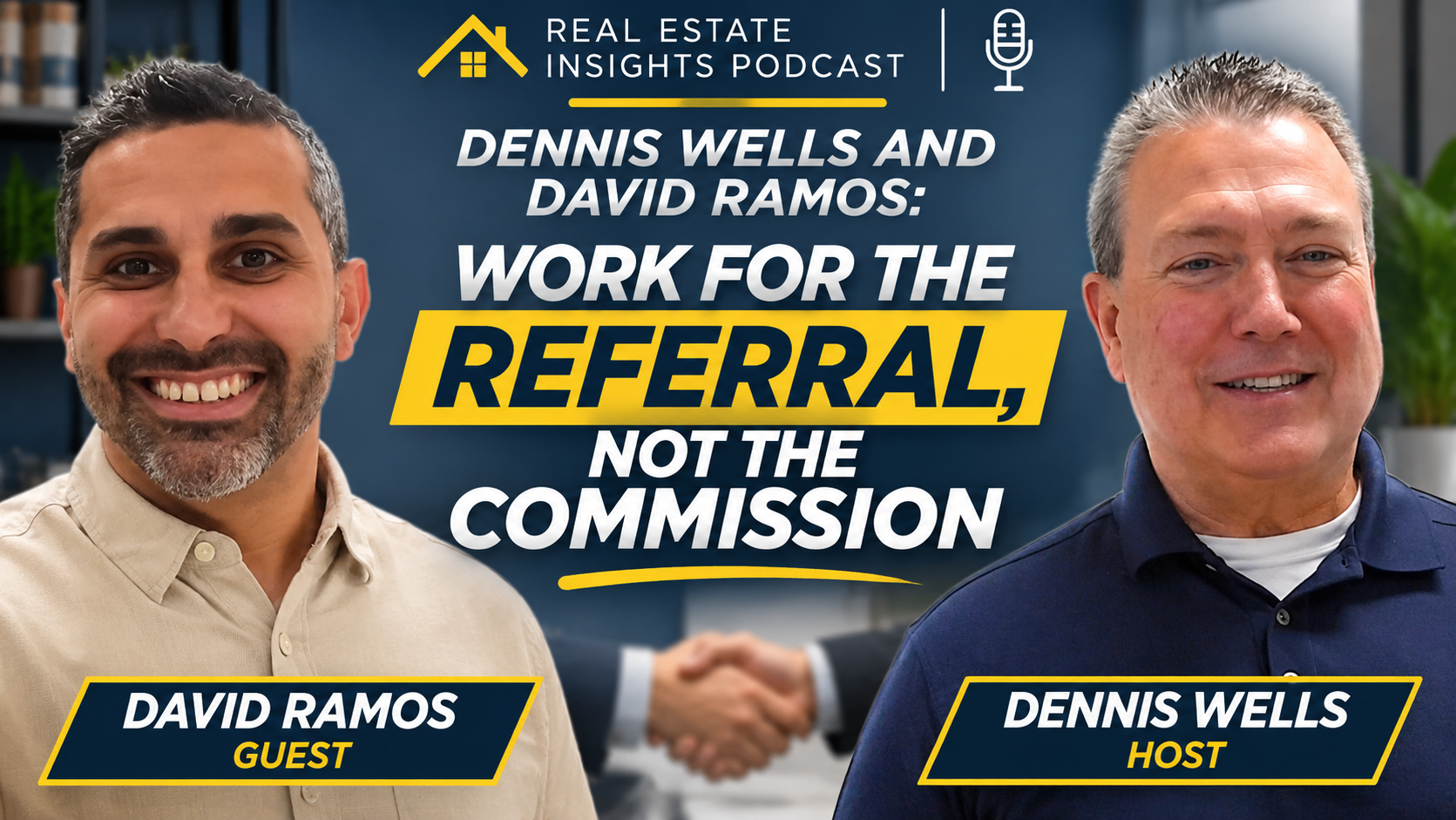
Tampa Bay Realtor David Ramos on Selling in Today’s Market, Staging, and Serving Clients With Integrity
From the Classroom to Real Estate
Dennis Wells recently sat down with David Ramos of Real Broker, a Tampa Bay area realtor with five years in the business. David serves the greater Tampa Bay area but is willing to travel across Florida, having worked with clients as far north as Yulee and as far south as Fort Myers. Before real estate, David spent years in education, starting as a middle school science teacher in 2009 and later serving as an assistant principal. He says the same heart for service that guided him in schools shapes how he treats clients today, with education first, then protecting their finances and their interests.
How the Market Has Changed
When David started, a house hit the market and sold quickly. Today, he says, you list a home and then have to get creative. He describes sellers using creative financing, including assumable loans and 2-1 buydowns, to attract buyers. He also points to marketing programs that push listings to a much wider audience across major websites. Dennis adds that on the mortgage side, the focus has shifted toward selling the monthly payment more than the purchase price, similar to the home builder playbook.
Buyer Leverage and the Long View
Buyers have more negotiating power than they have had in recent years, and David notes that interest rates can change later through a refinance or other strategies, while the purchase price is much harder to change. Dennis points out that buyers can negotiate repairs, upgrades, closing costs, and temporary or permanent rate buydowns. Both agree that, outside of the housing crisis years, home values have a long history of rising over time, so the more useful question is how much prices will go up and what that does to future affordability. Locking in a fixed rate also gives buyers a stable principal and interest payment, which rent cannot offer. Market conditions vary by area and nothing is guaranteed, so buyers should review their own numbers.
Uncertainty, Property Taxes, and Amendment 3
David says world politics and general uncertainty are causing hesitation among buyers, and he believes a calmer climate would help the market. Dennis notes that real estate has often been viewed as a hedge during uncertain times, that employment remains strong, and that inflation is somewhat hotter than the Fed would like. The conversation also touches on Florida’s Amendment 3 and property taxes. David and Dennis share the view that homeowners have seen taxes rise with home values faster than wages have grown, and that property tax relief could help families. These are their personal views on a policy topic, and readers may want to review the amendment and local budget impacts themselves.
Why Accountability Wins Clients
David believes realtors should work for the referral rather than the commission, since a commission is a one-time reward while a referral keeps giving. He shares a candid story about a contract choice that left a client in a tough spot when an inspection showed the home needed far more repairs than expected. Rather than shifting blame, he acknowledged the problem, supported her through arbitration, and plans to credit the lost money from his own commission. His message is that nobody is perfect, but accountability and transparency can keep a client relationship strong. Dennis compares it to a good restaurant or movie, where the experience is not complete until you tell someone else about it.
Advice for Home Sellers
David’s top advice for sellers is to clean and stage the home, because poor photos mean buyers never walk in. He invests about $500 per listing in photography and encourages sellers to think about curb appeal. He also recommends a pre-inspection, which lets sellers address issues early and share the report with buyers, reducing the chance of a second negotiation after the inspection period. Dennis compares a listing to a product on a grocery shelf: it should look good, be positioned well, and be priced competitively. David adds that a home should evoke both beauty and a sense of safety and viability for the buyer’s family.
Storms, Flood Disclosures, and Due Diligence
After several hurricanes, David says flood disclosures have become more important. He recalls a case where a buyer later discovered prior flooding that was not on the seller’s property disclosure, and he learned that FEMA claim records can be researched. His takeaway is that realtors should do their due diligence on listings, talk with sellers about anything they find, and address it proactively, since flood history can materially affect value. Rules and records vary, so consult your agent and appropriate professionals.
Advice for New Agents
For anyone considering real estate, David recommends getting a coach, investing in continuing education, and avoiding the costly mistakes that come from learning alone. Dennis agrees that coaching is an investment that speeds up growth. David also notes that many agents sell very few homes each year, so clients should consider experience when choosing who represents their biggest purchase or sale.
Connect With David Ramos
David Ramos of Real Broker can be reached at 813-869-0831. He has opened an office in Riverview, Florida, and welcomes calls from people who want to buy or sell a home or who are interested in growing a real estate career.
Sources
NAR.realtor
FEMA.gov
Floodsmart.gov
ConsumerFinancialProtectionBureau.gov
FreddieMac.com

Mortgage Calculator
See your total mortgage payments using the tool below.
| Year | Interest | Principal | Balance |
|---|