Your Local Mortgage Lender
Located in Sarasota, Florida
Personalized Mortgage Experience
Dennis Wells offers personalized service and loan options you'll love. We shop multiple lenders to find the best rate and product for you, getting you into your dream home faster.
With wholesale interest rates and cutting-edge technology, we make the mortgage process seamless. Trust the experts who focus solely on mortgages. Support your local community and experience elite client service.
Let us help you achieve your homeownership dreams!
The Home Loan Process
Mortgage Pre-Approval
Get pre-approved from one of our Loan Officers to see how much you can afford.
House Shopping
Work with a trusted Real Estate Agent to find a home you would like to move into.
Loan Application
Complete your home loan application to get the lending process started.
Don't take my word for it
Mortgage Programs
Experience the best mortgage experience located in Sarasota, Florida.
Home Loan Options
Our experienced mortgage advisors will walk you through the best mortgage loan program that will fit your specific scenario.
Conventional Home Loans.
FHA Home Loans.
USDA Home Loans.
VA Home Loans.
Frequently Asked Questions
How often can I refinance my mortgage?
There is no limit to the number of times you can refinance. However, you must qualify every time you apply and there will be costs associated with closing the loan each time.
Can I buy a home if I do not have money for a down payment?
Yes! There are a number of bond programs that offer low or no down payment financing options.
How do I know which mortgage is right for me?
The key to choosing the right mortgage is to understand the range of options and features available to you, as well as your budget, circumstances, and goals. Our licensed mortgage professionals are here to help you navigate that process. The more you know, the more comfortable and confident you will be choosing the best option for you and your family.
How long will the loan process take?
The Truth in Lending Act (TILA) does not permit a lender to close a loan until at least seven (7) business days have passed from the date your application was received. A typical home loan takes 30 days, as a number of third-party services such as appraisals, title work, and credit are required in conjunction with the mortgage process. Once you familiarize your Loan Officer with the details of your specific loan scenario, they will be able to provide you with a more specific timeline.
Will I qualify for a home loan?
The only way to find out is to speak with a qualified mortgage professional. Our Loan Officers have helped numerous clients who didn’t know if they could qualify to become home owners. We take the time to understand your financial situation and long-term financial goals, and then match you with the loan program that best fits your needs. Your approval for a loan may also largely depend on the price of the home you are financing. Getting pre-qualified prior to beginning your home search can give you an idea of what you may be able to afford.
Why do people refinance their mortgages?
Homeowners typically refinance to save money, either by obtaining a lower interest rate or by reducing the term of their loan. Refinancing is also a way to convert an adjustable loan to a fixed loan or to consolidate debts.
How much money will I have to pay upfront to buy a home?
This question does not have a simple, one-size-fits-all answer. The exact amount will depend on the price of the home you buy as well the type of mortgage financing you choose. Depending on your loan program, your down payment could be as much as 20% of the home’s price or as little as 3%, while some loans require no down payment at all.
Can I get a mortgage after bankruptcy?
You may still qualify for a home loan even if you have experienced a bankruptcy. The best way to find out if you qualify is to talk with a Loan Officer to discuss your options. Be sure to bring all paperwork regarding your bankruptcy so your Loan Officer can find the program that best fits your situation.
Should I lock my interest rate now, or wait until we are closer to our closing?
Interest rates fluctuate all day, every day. If an interest rate is good, it may be in your best interest to lock now. If you wait, you run the risk of an increase in rates later. If you are concerned that rates may go down after you lock, contact your Loan Officer to discuss your options. Some programs allow you to lock for an extended period and choose to lower your rate should a better one become available.
Most Recent Blog Updates
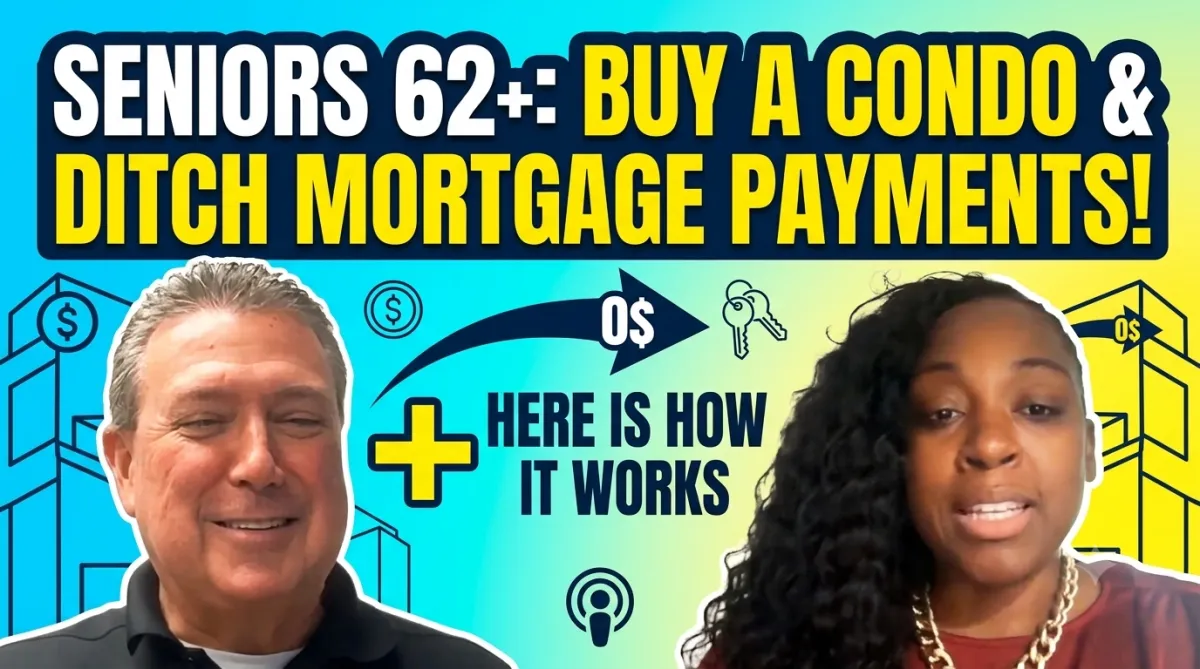
Seniors 62 and Older Can Buy a Condo With No Monthly Mortgage Payment and Here Is How It Works
The Conversation That Is Not Happening Nearly Enough
Dennis Wells sat down with St. Louis area realtor Diamond Terman of Red Gems Realty for a focused conversation about the financial challenges facing senior homebuyers and the solution that most of them have never seriously considered because of a reputation that no longer reflects how the product actually works.
Diamond had spoken earlier that day with a mature seller who wanted to sell her home and move into a condo. The problem was straightforward. She had approximately a hundred thousand dollars in cash from the expected equity in her current home. The condos she wanted to buy were running around $179,000. The gap felt insurmountable and she was prepared to conclude that the move she wanted to make was simply not available to her.
Diamond had already raised the reverse mortgage with her. This conversation is why that matters.
What the Reverse Mortgage for Purchase Actually Does
For homeowners who are 62 years of age or older the Home Equity Conversion Mortgage for Purchase, what Dennis Wells calls the equity conversion mortgage, allows a senior buyer to purchase a new home by putting down anywhere from approximately 50 to 60 percent of the purchase price. The remaining balance is covered by the reverse mortgage product. From that point forward as long as the buyer lives in the home as their primary residence, keeps current on property taxes, homeowners insurance, and any HOA fees, and maintains the property in reasonable condition, they can live there for the rest of their lives with no monthly mortgage payment.
For a senior on a fixed income the elimination of a monthly mortgage obligation can be the difference between a housing situation that works financially and one that creates ongoing stress. And for a buyer in Diamond's client's situation who has a hundred thousand dollars and is looking at a $179,000 condo the math that seemed impossible becomes entirely workable.
Why the Bad Reputation Is Outdated
Dennis acknowledges directly that the term reverse mortgage triggers a negative reaction in many people and that the reaction has roots in a legitimate history. The product category had real problems in earlier decades. In some ways it resembled the pre-2008 conventional mortgage market where loose structures and inadequate consumer protections created situations that hurt the borrowers they were supposed to help.
The regulatory and product changes since then have addressed the vast majority of those historical problems. The modern Home Equity Conversion Mortgage is an FHA-backed product regulated by the Department of Housing and Urban Development. The protections that exist for borrowers are substantially stronger than what was in place during the era that created the product's negative reputation.
As Dennis puts it if you understand how a regular mortgage works you understand approximately ninety percent of how the reverse mortgage works. The core mechanics are the same. The key differences are the direction of payment flow and the specific protections that apply to the borrower rather than the lender.
What Happens to the House When the Borrower Passes Away
This is the question Diamond hears most consistently from seniors who are considering the product. They want to know what the reverse mortgage means for their family and their estate.
The answer is more straightforward and more protective than most people expect.
The modern HECM is a non-recourse loan. If for some reason the borrower owes more on the reverse mortgage than the house is worth at the time of death the heirs are not responsible for the difference. The FHA insurance that backs the product covers that gap. The heirs will not inherit a debt that exceeds the value of the property.
If the heirs want to keep the house they can purchase it from the estate at 95 percent of the current appraised value. They do not have to come up with the full reverse mortgage balance. If the house is worth more than what is owed on the reverse mortgage at the time of death the sale proceeds work exactly like any other mortgage payoff. The loan gets satisfied from the proceeds and whatever remains goes to the estate.
Dennis is careful to note that he is not an estate planner and that each family's situation warrants proper estate planning advice from qualified professionals. He also notes that combining the reverse mortgage with appropriate life insurance is one way families structure their estate to ensure heirs receive the value they would have received regardless of the reverse mortgage.
The Timeline Question Heirs Need to Know
When a borrower with a reverse mortgage passes away the family has six months to make a decision about the property. This is more time than most people realize and the servicers are generally cooperative with families who communicate clearly and in a timely manner about what is happening and what they are planning to do. If additional time is needed beyond six months it can typically be arranged.
Dennis notes that this is not unique to reverse mortgages. Any time a loved one passes away with a mortgage on their property communicating with the servicer promptly is important. The servicers are generally sympathetic and willing to work with families who keep them informed.
Why This Conversation Matters in the St. Louis Market
Diamond sees a clear and growing population of seniors in the St. Louis area who want to move from larger homes that require maintenance into condos, villas, or townhomes that give them ownership without the ongoing responsibilities of a yard, a roof, snow removal, and all the other demands of a standalone property.
These are not people who want to rent. They are homeowners who have built their financial identity around ownership and who want to continue owning. The condo and villa market is exactly what they want. The pricing relative to the cash they have available from selling their current home is often the obstacle that makes the move feel impossible.
The reverse mortgage for purchase is the tool that bridges exactly that gap. A buyer with a hundred thousand dollars and a desire to buy a $179,000 condo has a solution available that the vast majority of seniors in that situation have never been told about.
As Diamond put it when it seems like there is no way, the reverse mortgage is a creative and viable path that can make the move seniors want to make actually possible.
Dennis Wells works with senior buyers and their real estate professionals to evaluate whether the Home Equity Conversion Mortgage is the right fit for a specific situation. Reach out to Dennis Wells for a consultation that covers the full picture of options available and contact Diamond Terman at Red Gems Realty for real estate expertise in the St. Louis market.
Sources
HUD.gov
NRMLA.org
ConsumerFinancialProtectionBureau.gov
FHA.com
Investopedia.com

Mortgage Calculator
See your total mortgage payments using the tool below.
| Year | Interest | Principal | Balance |
|---|